Friday, June 22, 2012

Reds and Blues


I am currently working on a short film called Reds and Blues. I wanted to make an emotive horror film that dealt with both the trauma of the mind as well as the body and make light of the moodier, undefined areas of the heart. The narrative is frenzied, just like a good melodrama should be. But this time my melodrama has verged into horror...

Synopsis-
Reds and Blues focuses on Anna, a woman with an enlarged heart. The enlarged heart affects Anna both physically and emotionally. She experiences shortness of breath and heart "spells" that leave her anxious and fatigued. Since her heart is bigger, her emotions are heightened. She feels more, loves more. Because of past experiences, she has been hurt in love and faults her own heart. Anna has chosen to have shallow relationships, ones in which she does not need to use her heart. To that end, she sleeps with her landlord Earl for a distraction and to get a break on her rent.
She is a dental hygienist and she works for a sadistic and overbearing Dentist, Dr. Pico. He is vicious and his procedures are bloody and she often leaves work covered in blood and haunted by the patient's screams. Unfortunately her emotive heart and mind is plagued by the patient's distress and she often wakes from nightmares.

One consolation or bright spot in her day is her conversations with her garbage man and friend, Levin. Levin tries to encourage her and tells her she needs to live, instead of hiding her heart-a big heart can be exciting.

One night, after a long day at work, Anna is walking along some train tracks and she comes across a dazed business man. The man is zoned out, zombie-like. He bumps into Anna and stumbles away, dropping a business card. Anna picks up the card, which has a curious notation, "Emotive Reclamation- Not using your heart? We'll take it!"


Intrigued, Anna calls the number on the business card and finds Natasha and J. Natasha and J are feminist artists who have began work on an interesting if gruesome project. They find men who would like to be heartless; lawyers, CEOs-men who feel it would be beneficial to live life heartlessly. Natasha and J have constructed a laboratory where they physically (and savagely), remove the men's hearts. Then they'll take the hearts and harvest them for their "emotive power". So Emotive Reclamation. Anna is excited to hear about their project because she has felt that she too could do without her heart. But Natasha and J are conflicted, should they take Anna's heart? Does Anna really have no use for it? The artists are careless in regard to the men they work with. But J argues that maybe Anna needs their help, encouragement. J feels that maybe as women, they should be helping her, not taking her heart. Natasha states that by doing what she asks they are helping her. The decision is up to Anna in the end. What does she do? .....

......

From Set- Natasha (Katerina Papadatos), Anna (Clara Alcott/Me) & J (Sarah Weis)


Wednesday, June 20, 2012

From the Reds and Blues Mood Board


Images from the mood board for my short film Reds and Blues-

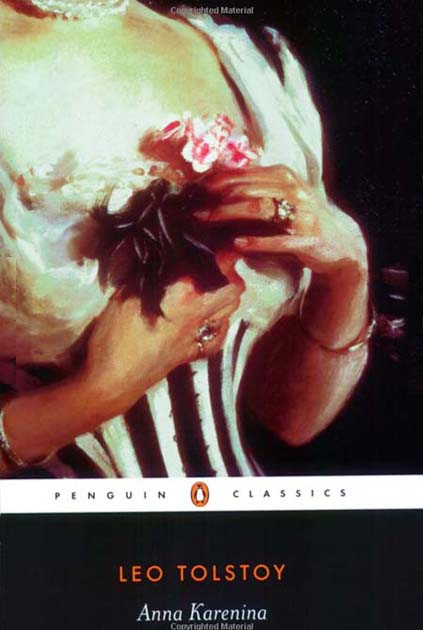
From top-Alex Prager, Brazil, heart in hand, freighted girl, dentist sign, Jeremy Blake video still from Punch Drunk Love, VHS tape, Amy Adams and her red hair, Anna Karenina, dental hygienist smocks, heart monitor, Simon Grim- garbage man in Henry Fool, turquoise slip, heart in plate, colored stockings

for full mood board please see-

Sunday, June 17, 2012

Splendid

Ninotchka 1939

Ninotchka. Lubitsch. Garbo. Splendid.

Billy Wilder had a sign in his office that read, "How would Lubitsch do it?" Ernst Lubitsch had a special touch, infact it's even called "the Lubitsch touch". His films were biting and sarcastic but also emotive and charming. He never goes too far. Lubitsch's characters are smart and he assumes the same for the audience, he didn't overstate. Sentiment but not saccharin. 

Greta Garbo stars as Ninotchka, she plays a Communist who travels to Paris. Ninotchka is sent to retrieve three wayword comrades who had been seduced by the City of Lights. They were all sent initially to retrieve Russian jewels. Ninotchka inevitably become distracted. She buys a hat, laughs at pratfalls and meets a man. Deligthful, splendid, Golden Age of Hollywood indeed. Billy Wilder worked on the script and Greta Garbo evidently laughs for the first time in her life. 

and the quips are are pretty memorable (if a little dark at times)-

 "The last mass trials were a great success. There are going to be fewer but better Russians."

Ninotchka- "Why do you want to carry my bags?" Porter- "That is my business."
Ninotchka-"That's no business. That's social injustice."

"Ninotchka, it's midnight. One half of Paris is making love to the other half."


Friday, June 15, 2012

Entr'acte or Awesome People Hanging Out Together circa 1924


René Clair and Erik Satie on the set of Entr'acte

Entr'acte is a short film that was an actual entr'acte for a ballet. A Dadaist Ballet. Directed by René Clair and scored by Erik Satie (!), the short includes cameos by Man Ray, Marcel Duchamp and Satie. René Clair was a French filmmaker who was active during the silent era through the 1960s. A director with a whimsical touch, Clair collaborated with various artists of the Parisian avante-guard. The non-narrative Entr'acte involves early fimmaking "tricks", a lot of slow-motion walking or jumping and various nonsensical vignettes. What's fun to watch is the general "lightness" that seemed to go into the production, the subjects are obviously enjoying themselves and not taking themselves or the enterprise seriously.


-the film really "takes off" when it comes to a surreal funeral march-at about 9:15

I like the picture of a relaxed René Clair and Satie on set. I hope that I can look as cool as Clair does when I'm directing. I try to keep things fun and relaxed. My productions are always inevitability crazy, at times absurd, to a passing eye it may as well be Dada ; )
“This sickness, to express oneself. What is it?”
-Jean Cocteau (The Paris Review, 1964)


image Lillian Bassman

Wednesday, June 13, 2012

Oh how terribly sad!

 C is for Clara (!) who wasted away…


I was delighted (?) to learn that Edward Gorey chose to use "Clara" as one of his subjects in his Ghastly Crumb Tinies. I guess there's something to having a particularly Victorian name. The Ghastly Crumb Tinies is sort of a picture book depicting the untimely demise of morbid tykes, one for every letter of the alphabet (Edward Gorey wrote little tomes ruminating on all sorts of life events)

As a child I was familiar with Edward Gorey because of the Mystery! intro. His whodunit art deco cartoon was so charming. I was intrigued by the lady holding the fan and the way she tapped her nose. My brother, sister and I would mimic the fainting lady. 

I still love the moody English dramas and cozy literary adaptations of Mystery and Masterpiece Theater. & lately the programming has been awesome with Downton Abbey and Sherlok. There's the best set dressing and propping on those shows. Working on a BBC drama is one of my "production goals". 


Although I'm currently going on a detox (Whole Living Action Plan), it was the result of a filming related stress (doughnut heavy) diet. I am most certainly not "wasting away" ; )