Showing posts with label Reds and Blues. Show all posts

Monday, July 23, 2012

Raise the Red Lantern


Zhang Yimou's Raise the Red Lantern is another film where the color Red is very prevalent. Gong Li (a contemporary Garbo), plays a young wife of a wealthy landowner. She is one of 4 wives and her husband decides daily which wife he will spend the night with. Servants place red lanterns outside of the favored wife's room. Li slowly looses touch with herself in the stifling environment, where she feels she must win favor to trust her own self worth.
It's commonly viewed that the film is a metaphor for living and working in China, with red being the obvious signifier. I have become a little frustrated as a viewer and reader when a woman's story is used to convey living under the constraints of society. I think it's a tired analogy and I've come to think that a woman's story is her own and is best told by a woman. Frustrations aside, this is a very, very good film and Yimou did live under the strain of his government. His films were often censored or banned from being shown in China, including Raise the Red Lantern. Raise the Red Lantern was probably his most striking statement. His recent films, like Hero, have more of a nationalistic feel and he doesn't experience censorship as much anymore. He may have tired of struggling with the government censors or he may have become more valued in his country. He directed the Opening Ceremonies at the 2008 Olympics in Beijing. Either way his films are not as combative now. Kieślowski had trouble with censors and his later films were also less directly political and more emotive (and partially shot outside out Poland)
Before working as a director, Zhang Yimou was a cinematographer and his symmetry and mise en scene is breathtaking, seriously. (for the record I rarely, rarely use the term mise en scene, not after film school, but the frames in Yimou's films are gorgeous).
Raise the Red Lantern is vivid, dark, angry, passionate & the gem in the frame is Gong Li.


Raise the Red Lantern, Zhang Yimou  1991

Thursday, July 5, 2012


Red Desert, Michelangelo Antonioni  1964

Wednesday, July 4, 2012


Red, Krzysztof Kieślowski  1994

Thursday, June 28, 2012

Red Alert


Some notable filmmakers have used red as a visual facet in their films. Krzysztof Kieślowski's Red, Michaelangelo Antonioni's Red Desert, Zhang Yimou's Raise the Red Lantern and Igmar Berman's Cries and Whispers to name a few.
In Cries and Whispers red is prominent throughout, from the titles cards at the beginning and the slow fades to an opaque red. The story takes place primarily in a villa with red walls and red carpeting. There's red in Liv Ullman's hair and in the blood of an unhappy sister who cuts herself in acts of self-harm. The red contrasts against the women's stark white costumes and against the rigidity and decorum under which they feel they must conduct themselves. There is a death at the center of the movie. The theme of death, of quiet and hidden feelings hangs with a heavy hush over the film. But the red is always there as a visual reminder that very real and living blood is coursing just under the skin.
The film focuses on three sisters. Agnes is dying of cancer and her two other sisters, Maria and Karin, came back to stay at their family's house to sit with her and be with her until the end. The film opens to quiet, just a ticking clock can be heard. Agnes lays alone in her room and her sisters are just outside in a formal sitting room. They wear high collared white Victorian nightgowns. Liv Ullman lays like a Bodecelli, her red hair flowing down her shoulders.
The sisters, although in mourning, are also addressing the distance in their relationships and the result of living lives closed off from expressing their feelings. The only one who is more open is Agnes who is dying. After she dies she "wakes up" and she calls for her sisters to come and be with her because she is so scared. This surreal and unnerving sequence made me sit up while watching it. Although it may be a dream in the story, the naturalism in the way the sequence is staged is freighting. I love it. It reminds me of the scene in Cocteau's Orpheus where Death's Chauffeur tells Orpheus's wife that he hates the smell of burning because he had been cremated.
Agnes's reanimation forces all three sisters, for a time, to address their lives and express their feelings. And to address the relationships between themselves and the experiences they had as children with a distant mother. Bergman movies can be chilly but there is some warmth when the sisters come together.

There is a lot of feminine energy in my family, there's a lot of sisters, cousins and aunts. A Southern family, we come back together to support each other during trauma and illness. We sit together, read, clean and cook. The support and relationship between women is one of the themes that comes up in my short film Reds and Blues. The idea that women can be supportive of each other rather than competitive. To attempt to reach out rather than let things go.

 from Reds and Blues


Premiere of Cries and Whispers
I like the press and set photos from Bergman movies. I see those stoic faces looking so happy. And maybe everything is going to be alright.

Cries and Whispers, Ingmar Bergman  1972

Monday, June 25, 2012

The Mean Reds: Some of the inspiration for Reds and Blues


What does a sensitive and emotive person do when the world is not a particularly sensitive and emotive place? The sensitive person needs to get over it. And potentially make some art.
I used to fret and immobilize myself because I felt (and was told by others), that I was too sensitive. My therapist told me to accept it and move on and we further discussed that as a filmmaker I just may be more affected. I may need to see and hear things deeply. To that end when I wrote my next short, Reds and Blues, I considered the depth of my senses, my big heart.

Emotions that I could practically see.
The idea of actually seeing surrealistically, your own emotions led into the visual motifs and overall themes in my film Reds and Blues.

-Reds and Blues-
Anna, the protagonist of the film, has an enlarged heart. She experiences spells and her heart literally glows within her chest. I wanted the film to shift with her emotions to red and blue tones. The title comes from emotional states- red for anger/fear and blue for sadness (like when you get the blues).


I lifted the words directly out of a scene in Breakfast at Tiffany's

Holly: You know those days when you get the mean reds?
Paul: The "mean reds"? You mean, like the blues?
Holly: No. The blues are because you're getting fat or it's been raining too long. You're just sad, that's all. The mean reds are horrible. Suddenly you're afraid, and you don't know what you're afraid of. Don't you ever get that feeling?
Paul: Sure.

With few reservations and delight, I am unabashed to say that I love Breakfast At Tiffany's.*
I'm a girl, I get my period, I like to eat chocolate, I like to put a pillow between my legs and watch Breakfast at Tiffany's. My mother got the movie for me when I was sixteen. The film eventually informed a lot,  like my penchant for off-kilter dinner parties. It influenced the way I dressed- you can never learn too early that a black cocktail dress is basically all you need to go out in. & there's a loopiness/elegance that practically governed my decided outward persona. I've crawled on my hands and knees looking for my heels as a beau waited at the edge of my disheveled bedroom. I've stood in my kitchen with bare feet and drank champagne before breakfast (but as Paul says in the movie, it was more often with breakfast). I've also at times pushed people away who have gotten too close and responded with a cheerful indifference. 

Truman Capote's book and Blake Edward's film really don't have too much to do with each other. They are of two very different tones. But I believe that they are both significant and memorable in their own way. At times the film touched on some of the themes of the book. The "mean reds" sequence in the film always resonated with me. It was a counterweight to Holly Golightly's character, her life was not all Givenchy dresses and martinis. Her past bore memories of growing up poor and being a child bride. When you live in a big city like New York, LA or Chicago- you can go to amazing parties, meet amazing people, look amazing... but at times you wake up alone or feeling alone. You're lost and potentially afraid...but "you don't know what you're afraid of." That brief bleakness is what is shared with the novel.

I've felt that Truman Capote and Audrey Hepburn both had an air of sadness about them. They had many other noted characteristics that lead to their iconicity but there was some distance in the eyes. There was a lot of upheaval in their childhoods and they may not have had enough love. Hepburn went through some rough years during World War II. She suffered from illness and malnutrition and had to literally hide from Nazis at times. Truman Capote's mother passed him on to various relatives and was outwardly vocal about not wanting to of had a baby. He has stated that as a young child he went to bed early because he was so lonely. His writing, in part, came from a search for an activity to use his mind and take up some time. A lot of his short stories and the novel Other Voices, Other Rooms focus on a child who has been sent to be cared for by relatives.

Capote was not happy with the film adaptation of Breakfast at Tiffany's, he had requested another lost soul to play Holly-Marilyn Monroe.


*My reservation would be the insensitive portrayal of Mr. Yunioshi

Friday, June 22, 2012

Reds and Blues


I am currently working on a short film called Reds and Blues. I wanted to make an emotive horror film that dealt with both the trauma of the mind as well as the body and make light of the moodier, undefined areas of the heart. The narrative is frenzied, just like a good melodrama should be. But this time my melodrama has verged into horror...

Synopsis-
Reds and Blues focuses on Anna, a woman with an enlarged heart. The enlarged heart affects Anna both physically and emotionally. She experiences shortness of breath and heart "spells" that leave her anxious and fatigued. Since her heart is bigger, her emotions are heightened. She feels more, loves more. Because of past experiences, she has been hurt in love and faults her own heart. Anna has chosen to have shallow relationships, ones in which she does not need to use her heart. To that end, she sleeps with her landlord Earl for a distraction and to get a break on her rent.
She is a dental hygienist and she works for a sadistic and overbearing Dentist, Dr. Pico. He is vicious and his procedures are bloody and she often leaves work covered in blood and haunted by the patient's screams. Unfortunately her emotive heart and mind is plagued by the patient's distress and she often wakes from nightmares.

One consolation or bright spot in her day is her conversations with her garbage man and friend, Levin. Levin tries to encourage her and tells her she needs to live, instead of hiding her heart-a big heart can be exciting.

One night, after a long day at work, Anna is walking along some train tracks and she comes across a dazed business man. The man is zoned out, zombie-like. He bumps into Anna and stumbles away, dropping a business card. Anna picks up the card, which has a curious notation, "Emotive Reclamation- Not using your heart? We'll take it!"


Intrigued, Anna calls the number on the business card and finds Natasha and J. Natasha and J are feminist artists who have began work on an interesting if gruesome project. They find men who would like to be heartless; lawyers, CEOs-men who feel it would be beneficial to live life heartlessly. Natasha and J have constructed a laboratory where they physically (and savagely), remove the men's hearts. Then they'll take the hearts and harvest them for their "emotive power". So Emotive Reclamation. Anna is excited to hear about their project because she has felt that she too could do without her heart. But Natasha and J are conflicted, should they take Anna's heart? Does Anna really have no use for it? The artists are careless in regard to the men they work with. But J argues that maybe Anna needs their help, encouragement. J feels that maybe as women, they should be helping her, not taking her heart. Natasha states that by doing what she asks they are helping her. The decision is up to Anna in the end. What does she do? .....

......

From Set- Natasha (Katerina Papadatos), Anna (Clara Alcott/Me) & J (Sarah Weis)


Wednesday, June 20, 2012

From the Reds and Blues Mood Board


Images from the mood board for my short film Reds and Blues-

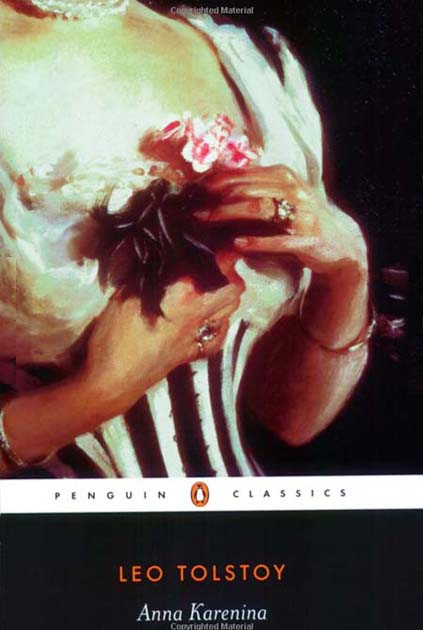
From top-Alex Prager, Brazil, heart in hand, freighted girl, dentist sign, Jeremy Blake video still from Punch Drunk Love, VHS tape, Amy Adams and her red hair, Anna Karenina, dental hygienist smocks, heart monitor, Simon Grim- garbage man in Henry Fool, turquoise slip, heart in plate, colored stockings

for full mood board please see-

Wednesday, August 24, 2011

She's Dope


I want to say a word about my friend Sarah Weis. Sarah played the part of Joselyn in Kick and now we are working together again on my short film Reds and Blues.


We met when we were seated next to each other at a dinner party. She told me that she was an actress, which I thought was interesting. Even though Chicago has a vibrant theater scene, I really didn't know a lot of actors. She told me that she was performing in a play about the Essanay Studios, portraying a young Gloria Swanson. A year later when I was developing Kick, I was wracking my brain because I needed an actress, any actress really. I tracked her down online and I got in contact. I was apprehensive because of some of the subject matter in KICK. But little did I know. Sarah is also a media artist and she runs a production company with her creative partner Arturo Cubacub called i-cubed HYPERMEDIA. I watched some of their videos and there was no need to be shy, rather there was a similar sensibility I felt. Sarah has her hand in a lot of mediums but she is a great actress. She's really, really good and beyond what my expectations were. She has a filmmaker's eye on set and her insights into the story & character are invaluable. Not to overstate it but, my collaboration with Sarah has been one of the most important in my life and I am so happy to have that. I hope we are able to keep creatively associated with each other. & I'm pretty sure we will.

One of my favorite of Sarah & Arturo's videos is Greater Than or Less Than <> or Dollar vs. Euro. Among other things it addresses currency dominance and the relationship between Dolly, a power hungry woman in a powdered wig & Euro, a French maid. Here's the opening scene and a music video from the piece. That's oil that Dolly keeps drinking...


& girl's got some pipes. Sarah just released a tape on the Chicago label Plus Tapes.
Here's a music video for "Stretch"


My Favorite is Pennies from Heaven, she sang it for <>
Pennies From Heaven by Sarah Weis

Sarah is working on this song called Opiate girl, hence the title of the post
-Opiate Girl (pre-version)

Sunday, August 21, 2011

Noir-There is a crack in everything, that's how the light gets in.


Thoughts on Film Noir, Chicago, night shooting, etc.

I have been thinking a lot about Film Noir lately. Actually I'm always thinking about Film Noir... What a murky American art form. My feature length screenplay has many noir elements. I'm hoping to keep pushing it in that direction, in the framework for the story and especially for the character's through lines. I've always felt that Chicago, where my script is set, is very noir. It can often be grey, dark and bleak. And it has always been my opinion that Chicago as a city is very undershot. A lot of film production takes place but mostly just on the North East side. I don't think the city has been well represented on film. Most times I do not feel a connection or familiarity with what I see on screen. The Fugitive and The Dark Knight are exceptions, I thought both of those films look like Chicago.
I'm excited to shoot around Chicago on location. Shooting a noir potentially means a lot of night shooting, which is always hard, but there's the basic issue of light. My hope, my hope is to at least shoot the short version of the script on film. Jose Luis Rios, my good friend and cinematographer on the project, and I have been having a lot of discussions about the photography. We would like to shoot on Super 16mm for the texture and the grain. I want the film to have sort of a distant "displaced feel" which S16 could provide. If I'm not able to swing film (still crossing my fingers), I'm not adverse to shooting digitally. Never have been. I'm currently shooting a short called Reds and Blues and we are shooting on the Canon 5D. I love the footage that's coming back. One thing that the 5D and 7D do well is shoot in low light. The image below was shot at about 8:30pm with only street lights providing illumination. It's dark but when Sarah turned her head towards the light she had a decent exposure on her face. It was nice and very noir.


Photo at top of post by Jack Delano link

There is a crack in everything, that's how the light gets in. -Leonard Cohen

Friday, February 4, 2011

Heart Placement


In Kick the women experience changes in their bodies, including anomalies in their menstrual cycles. My friend Andrea Park did the graphics for the film and we had a good time with the design for the tampon boxes. I was very thankful to work with someone so proficient and talented. Presently she is working on much more important things, like the designs for her wedding invitations and programs. I hope we can work together on some pill bottles for a horror melodrama that I am writing. I hope we can take our feminine heart aesthetic "to the wall" as I like to say.